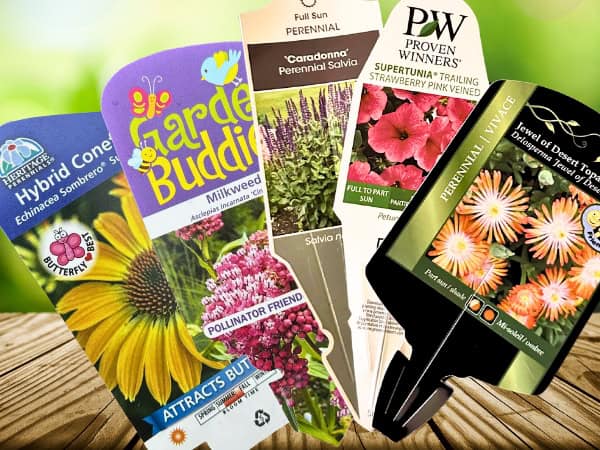
How to Read a Plant Tag
What All That Information Really Means
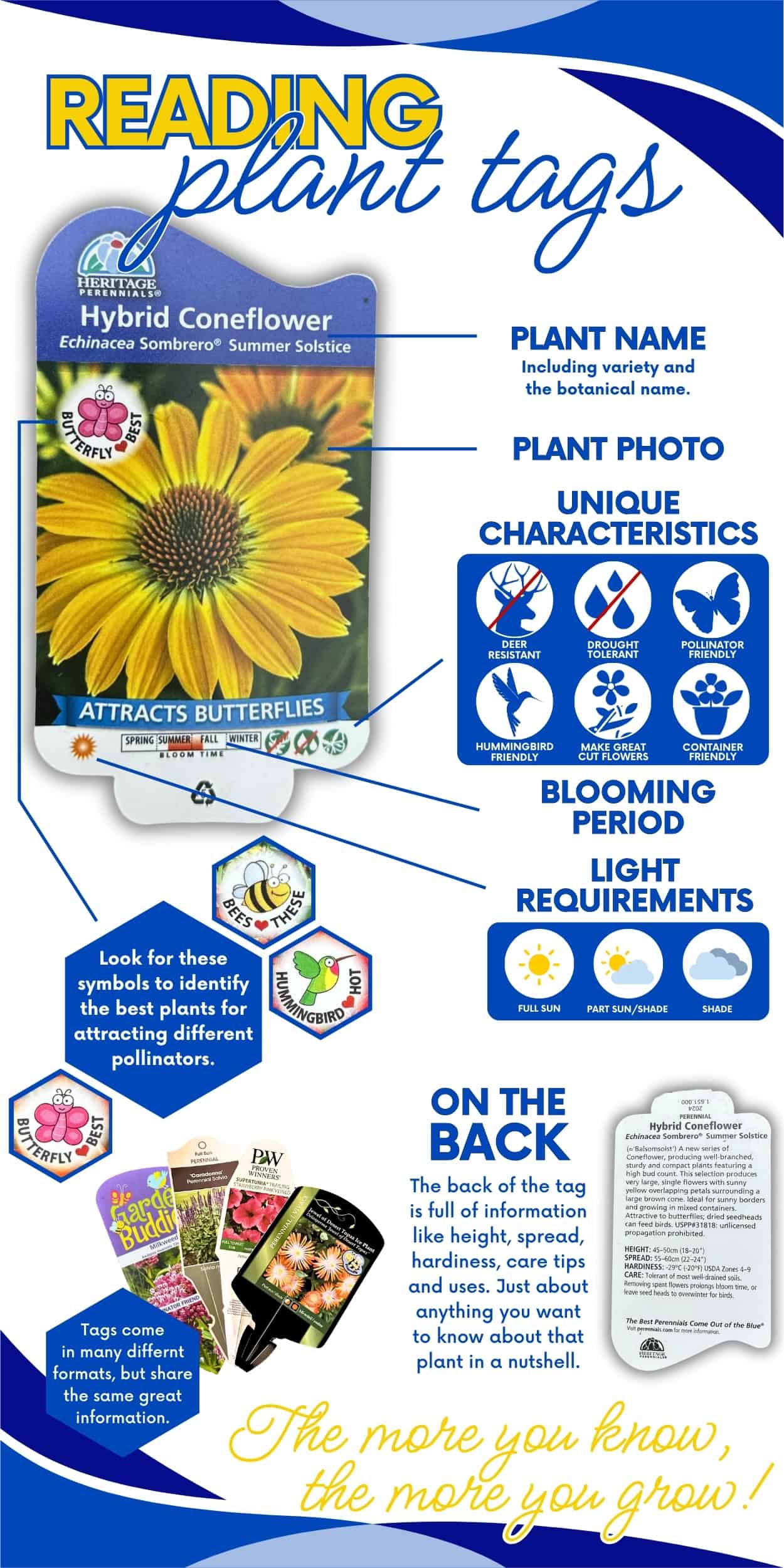
Plant tags can look a little overwhelming at first glance — icons, numbers, symbols, and sometimes tiny print. But once you know how to read them, plant tags become one of the most helpful tools for choosing the right plant and setting it up for success at home.
Here’s a simple breakdown of what plant tags are telling you — and how to use that information to garden with confidence.
🌞 Sun & Light Requirements
One of the most important pieces of information on a plant tag is how much light a plant needs.

You’ll typically see one of these terms or symbols:
- Full Sun – 6+ hours of direct sunlight per day
- Part Sun / Part Shade – 3–6 hours of sun, often with afternoon shade
- Full Shade – Less than 3 hours of direct sun
💡 Helpful tip: Morning sun is gentler than hot afternoon sun. A plant listed for “part shade” often appreciates some protection from intense afternoon heat.
📏 Spacing & Mature Size
How big will the plant actually get?
Plant tags usually list a mature height and width, often shown in centimetres, inches or metres.
This tells you:
- How tall the plant will grow once fully mature
- How wide it will spread once fully mature
Why this matters:
- Plants need space for airflow and healthy growth
- Crowded plants are more prone to disease
- Knowing mature size helps you avoid over-planting
🌱 Garden planning tip: That small plant in a 1-gallon pot may grow much larger over time — always plant for the future size, not how it looks today.
How fast will the plant grow?
In addition to mature height and width, it’s helpful to understand how quickly a plant grows each year. While growth rates vary by variety, growing conditions, and care, the examples below offer general year-over-year growth estimates for healthy, well-established plants.
Perennials:
Often increase 6–12 inches per growing season, filling out more each year until they reach their mature size.
Shrubs:
Many shrubs grow 6–24 inches per year, depending on the type. Slow-growing varieties take longer to reach full size, while faster growers fill in more quickly.
Trees:
Most landscape trees grow 12–24 inches per year once established. Some fast-growing trees may exceed this, while others focus more on root development in their early years.
Evergreens:
Typically grow 6–12 inches per year, with some varieties growing slowly and steadily over time.
🌿 Important note: These growth rates are estimates, not guarantees. Weather, soil quality, sunlight, watering, spacing, and overall care all influence how quickly a plant grows. In the first year after planting, growth is often slower as the plant focuses on establishing strong roots. With proper care, growth usually increases in the second and third seasons.
❄️ Hardiness Zone
Will it survive winter?
The hardiness zone tells you whether a plant can survive outdoors year-round in our climate.
In Southwestern Ontario, most areas fall within Zone 6b.
- If a plant’s zone number is equal to or lower than your zone, it’s generally winter hardy
- If the zone is higher, the plant may need protection or be grown as an annual or indoor plant
🌨️ Important note: Microclimates, snow cover, soil drainage, and winter wind all play a role — the zone is a guideline, not a guarantee.
💧 Watering Needs
How thirsty is this plant?
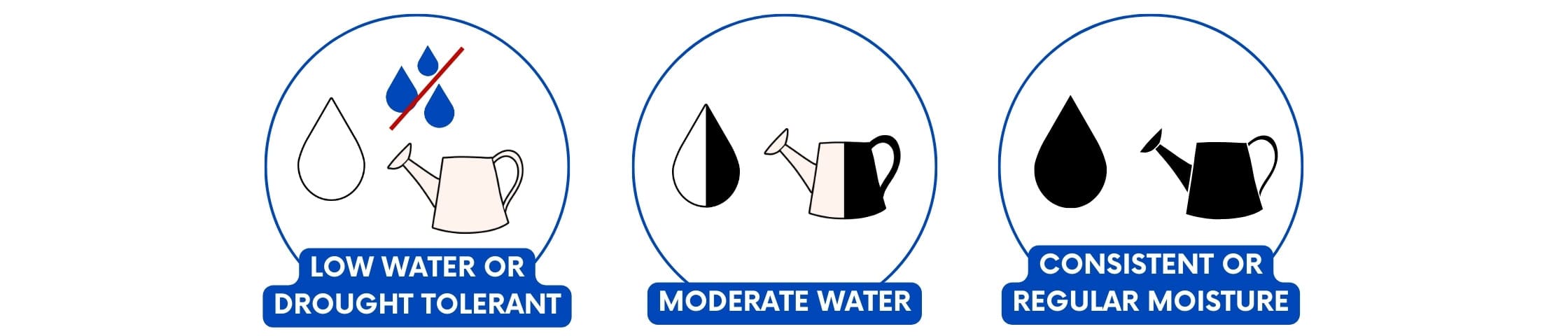
Many plant tags use words or symbols to describe watering needs, such as:
- Low water / Drought tolerant
- Moderate water
- Consistent or regular moisture
This doesn’t mean watering on a strict schedule — it’s about how the soil should feel:
- Moist but not soggy
- Allowed to dry slightly between watering
- Never completely drying out
💦 Good to know: Containers dry out faster than garden beds, so potted plants may need more frequent watering than the tag suggests.
🌿 Soil & Drainage
Sometimes listed, sometimes implied.
Some plant tags include soil preferences like:
- Well-drained soil
- Moist soil
- Average garden soil
Choosing the Right Soil
Using the right soil helps plants establish faster and grow stronger.
- Triple Mix (for garden beds & perennials):
A great all-purpose soil for planting trees, shrubs, and perennials in the ground. It improves drainage, adds organic matter, and helps roots establish. - Potting Mix (for containers & raised beds):
Designed to be lightweight and well-draining. Always use potting mix for containers — garden soil is too heavy and can compact easily. - Perlite:
A lightweight additive that improves drainage and airflow in soil. Often used in potting mixes or added to heavier soils to prevent waterlogging. - Peat Moss:
Helps retain moisture and improve soil structure. Commonly used when planting in sandy or fast-draining soils, or for plants that prefer slightly acidic conditions. - Manure or Compost:
Adds nutrients and organic matter to the soil. Best mixed into garden beds before planting or used as a top dressing to improve soil health over time.
🌱 Helpful tip: Soil needs vary by plant and location. When in doubt, start with good drainage and adjust based on how the plant responds.
🌸 Bonus Information You Might See
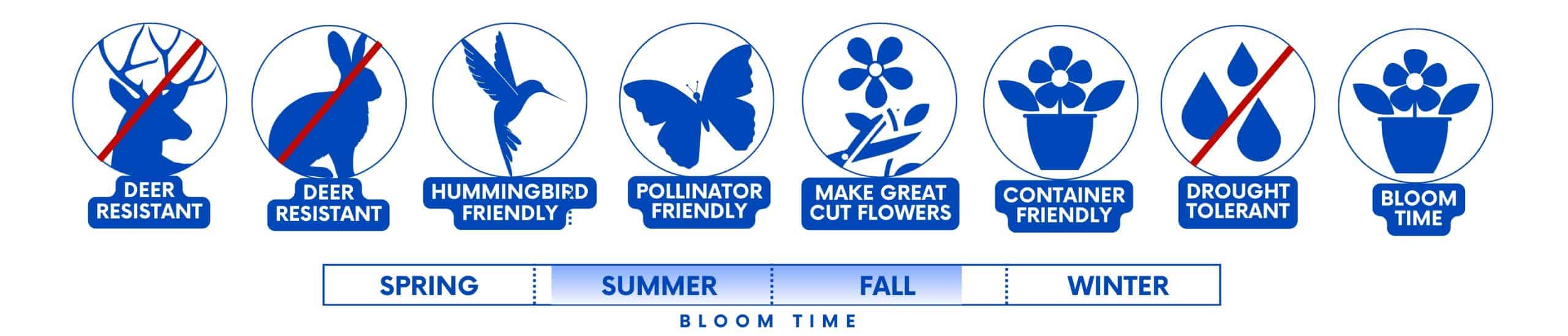
Depending on the supplier, plant tags may also include:
- Bloom time or flower colour
- Foliage interest
- Attracts pollinators
- Deer or rabbit resistance
- Native plant information
- Special care notes
Since tags vary by supplier, always focus on the core details first: light, size, zone, and water.
🌼 Why Plant Tags Matter
Plant tags help you:
- Choose plants suited to your space
- Reduce trial-and-error gardening
- Save time, money, and frustration
- Set your plants up for long-term success
And remember — plant tags are just a starting point. Your local conditions, soil, and care all play an important role.
🌱 Still Unsure? We’re Here to Help
If you ever feel stuck, bring the tag — or the plant — and ask. Our team is always happy to help you match the right plant to the right place in your home or garden.
Happy planting!